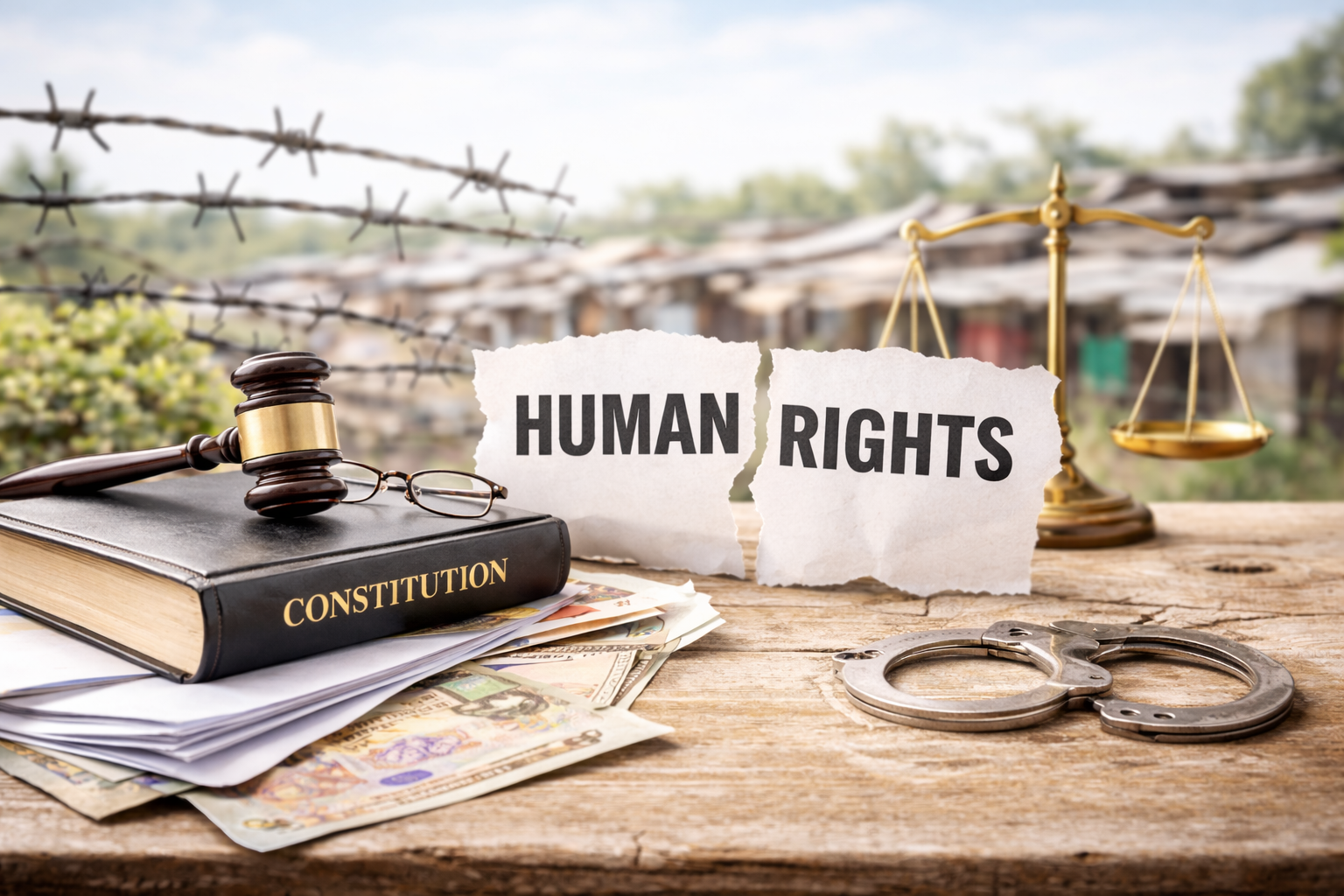
Constitutional rights in Kenya are among the most progressive in Africa, enshrined in the 2010 Constitution with the promise of transforming governance, justice, and social equality. From civil liberties to socio-economic entitlements, the Constitution sets out an ambitious vision of a just and democratic society.
Yet more than a decade later, many Kenyans continue to experience a harsh disconnect between constitutional guarantees and lived reality. While the law speaks of dignity and equality, daily experiences reflect exclusion, abuse of power, and unequal access to justice. This contradiction raises fundamental questions about implementation, accountability, and political will.
Understanding Constitutional Rights in Kenya
Constitutional rights in Kenya are primarily articulated in the Bill of Rights, which forms Chapter Four of the Constitution. These rights are legally binding and apply to all state organs and public officers.
They include:
- Civil and political rights
- Economic and social rights
- Cultural and environmental rights
The Bill of Rights Kenya is designed to guide all laws, policies, and administrative actions. In theory, no government decision should violate these protections. However, despite this robust framework, constitutional implementation remains uneven across sectors.
The Promise of the Kenya Constitution 2010
The Kenya Constitution 2010 was adopted to correct decades of authoritarian rule and state abuse. It sought to place constitutional rights in Kenya at the center of governance.
Key aspirations of the Kenya Constitution 2010 include:
- Respect for human dignity
- Equality and non-discrimination
- Social justice and inclusion
The Constitution redefined the relationship between the state and citizens, shifting power away from unchecked authority toward constitutional supremacy. However, translating these ideals into everyday governance has proven difficult.
The Gap Between Constitutional Rights and Reality in Kenya
The gap between constitutional rights and reality in Kenya remains one of the most pressing governance challenges today. While laws have changed, institutional behavior often has not.
This gap manifests in:
- Selective enforcement of rights
- Delayed justice processes
- Persistent inequality
The gap between constitutional rights and reality in Kenya is most visible among marginalized communities who struggle to access basic services despite constitutional guarantees.
Human Rights in Kenya: Legal Protection vs Lived Experience
Human rights in Kenya are constitutionally protected, yet violations remain widespread. From unlawful arrests to suppression of free expression, citizens regularly encounter state actions that contradict constitutional principles.
Human rights in Kenya are undermined by:
- Weak accountability mechanisms
- Political interference
- Limited civic awareness
Although courts have increasingly defended rights, enforcement gaps continue to undermine public confidence in constitutional protections.
Rule of Law in Kenya and State Accountability
The rule of law in Kenya is essential for protecting constitutional rights in Kenya. It requires that all persons, including state officials, are subject to the law.
However, the rule of law in Kenya is often compromised when:
- Court orders are ignored
- Security agencies act with impunity
- Political considerations override legal standards
Without strict adherence to the rule of law, constitutional rights remain theoretical rather than practical.
Judicial Enforcement of Rights
Judicial enforcement is a critical mechanism for bridging the gap between law and reality. Courts play a central role in interpreting and enforcing constitutional rights in Kenya.
Judicial enforcement has led to:
- Protection of media freedom
- Enforcement of fair administrative action
- Advancement of public interest litigation
Despite these gains, limited access to courts and delays in case resolution continue to restrict the full realization of rights.
Access to Justice in Kenya
Access to justice in Kenya is a constitutional right, yet it remains unevenly distributed. Many citizens lack the financial, geographical, or informational resources needed to pursue legal remedies.
Barriers to access to justice in Kenya include:
- High legal costs
- Limited legal aid
- Complex court procedures
Without meaningful access to justice, violations of constitutional rights often go unchallenged.
Socio-Economic Rights Kenya: The Hardest to Realize
Socio-economic rights Kenya include rights to health, housing, education, water, and food. These rights are essential to human dignity but remain the least realized.
Challenges facing socio-economic rights Kenya include:
- Budgetary constraints
- Poor service delivery
- Corruption and mismanagement
Despite constitutional recognition, millions of Kenyans continue to lack access to basic services, deepening inequality.
Police Brutality Kenya and Rights Violations
Police brutality Kenya remains a stark example of the gap between constitutional protection and state practice. The Constitution guarantees freedom from torture and cruel treatment, yet cases of excessive force persist.
Police brutality Kenya is fueled by:
- Weak oversight mechanisms
- Culture of impunity
- Political pressure during unrest
Such violations erode trust in state institutions and undermine the credibility of constitutional governance.
Marginalized Communities Kenya
Marginalized communities Kenya were specifically recognized in the Constitution to address historical injustices. However, structural inequalities continue to limit their access to resources and political representation.
Marginalized communities Kenya often face:
- Discrimination in service delivery
- Limited political influence
- Poor infrastructure
This persistent exclusion highlights the failure to fully implement constitutional protections.
Long-Tail Reality: Implementation Failures
Many scholars and citizens question the challenges in implementing constitutional rights in Kenya. These challenges stem from institutional resistance, inadequate funding, and lack of political commitment.
Similarly, debates continue on why constitutional rights are not fully realized in Kenya. Elections alone have not translated into structural reforms necessary to protect rights consistently.
These long-tail issues demonstrate that legal guarantees require strong institutions and active civic engagement to succeed.
Governance and Justice in Practice
Governance and justice remain closely linked to the realization of constitutional rights in Kenya. Weak governance systems often undermine rights enforcement.
Governance and justice failures include:
- Lack of transparency
- Abuse of public office
- Poor public participation
Strengthening governance structures is essential for closing the gap between constitutional ideals and everyday reality.
State Accountability and Reform
State accountability is central to transforming constitutional rights in Kenya from promises into lived experiences. Accountability mechanisms exist but are often undermined by political interference.
Effective state accountability requires:
- Independent oversight institutions
- Enforcement of court decisions
- Citizen vigilance
Without accountability, constitutional rights risk becoming symbolic rather than substantive.
Conclusion
In conclusion, constitutional rights in Kenya represent a bold and transformative vision of justice, equality, and dignity. However, the persistent gap between law and reality reveals deep systemic weaknesses in implementation, governance, and accountability.
Bridging this gap requires:
- Strengthening institutions
- Upholding the rule of law
- Expanding access to justice
- Empowering citizens
Until constitutional guarantees are matched by consistent enforcement and political will, the promise of constitutional rights in Kenya will remain unfulfilled for many citizens.
About The Author


