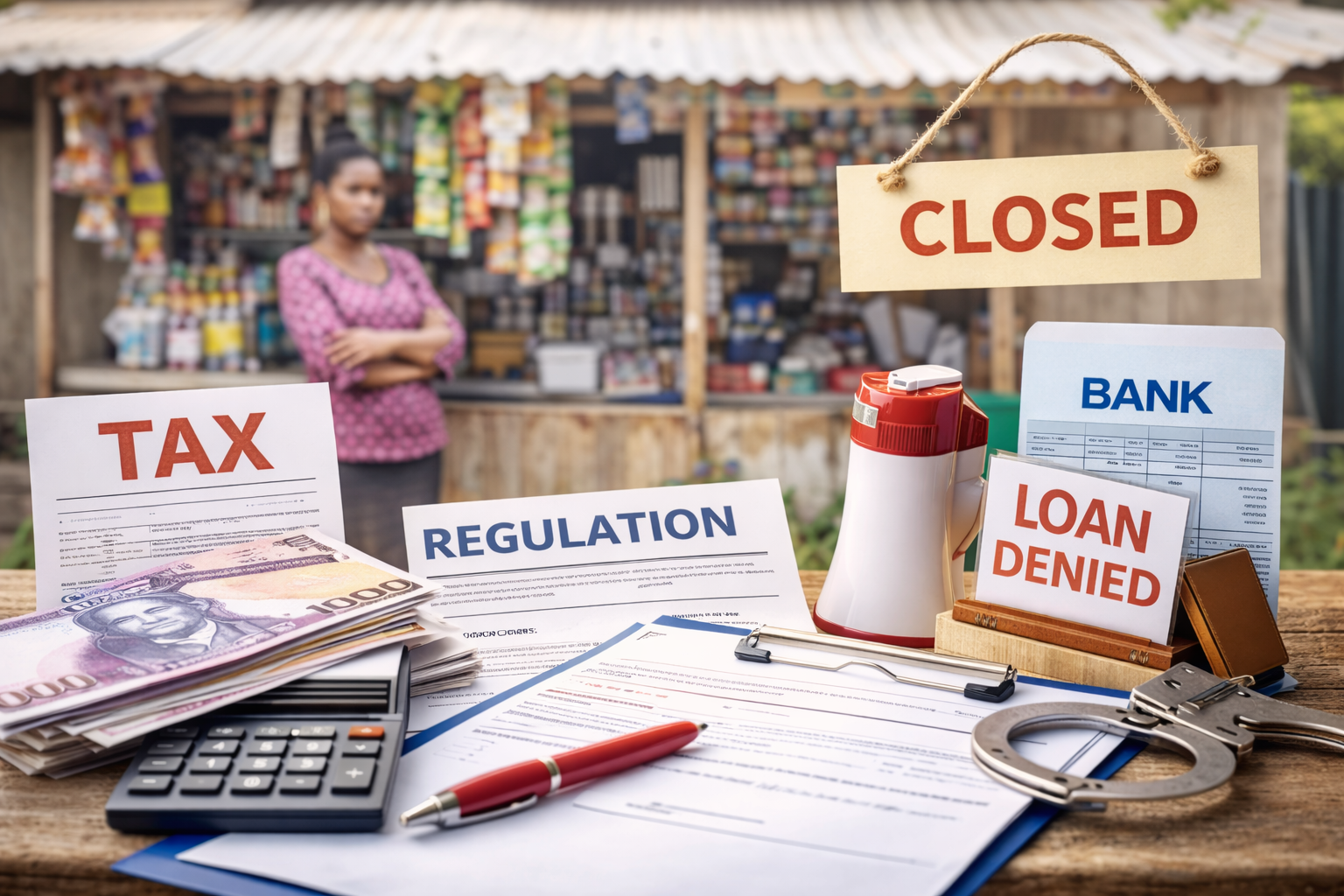
Small businesses in Kenya form the backbone of the national economy, employing millions of people and driving innovation at the grassroots level. From roadside vendors and small retail shops to tech startups and manufacturing enterprises, these businesses sustain livelihoods and fuel economic activity across both urban and rural areas.
Yet despite their importance, small businesses in Kenya operate in a challenging policy environment. Government decisions on taxation, regulation, and economic planning often determine whether these enterprises thrive or struggle. While some policies aim to support entrepreneurship, others unintentionally increase costs, limit growth, and discourage formalization.
This article explores how government policy choices directly affect small businesses in Kenya, examining regulatory frameworks, taxation, access to finance, and the broader economic policy environment.
Understanding Small Businesses in Kenya
Small businesses in Kenya include micro, small, and medium-sized enterprises operating in both the formal and informal sectors. These enterprises range from family-owned shops to growing service providers and light manufacturers.
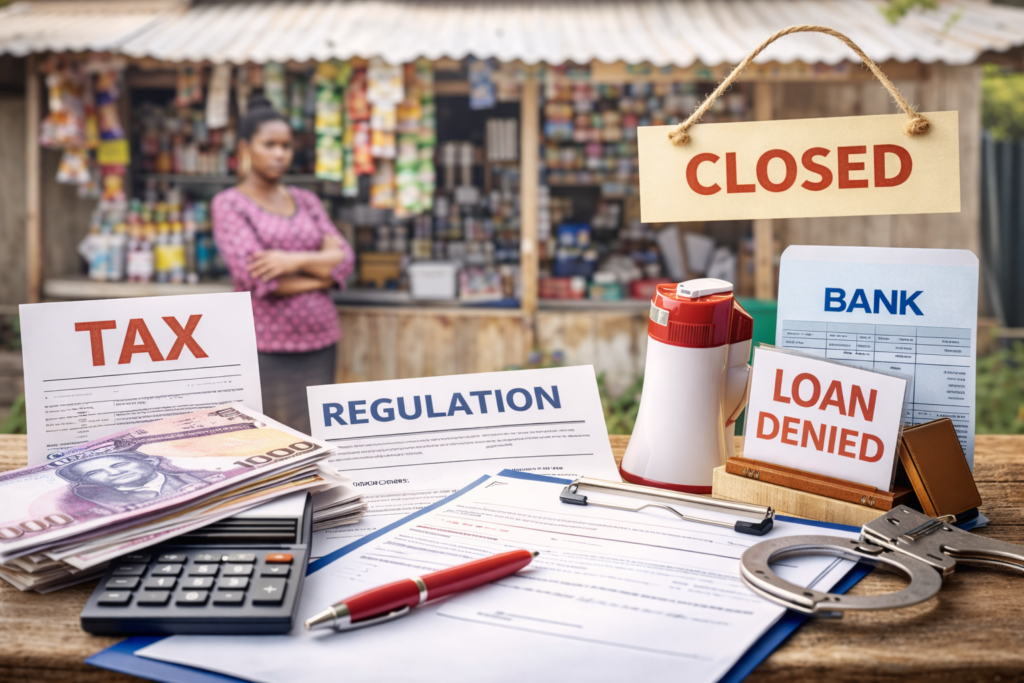
The SME sector in Kenya contributes significantly to employment and income generation. However, many enterprises remain vulnerable due to limited capital, policy uncertainty, and inconsistent government support.
For most entrepreneurs, government policy in Kenya is not an abstract concept, it directly influences daily operations, profitability, and sustainability.
Government Policy in Kenya and the Business Environment
Government policy in Kenya plays a decisive role in shaping the business climate. Policies determine how easy or difficult it is to register, operate, and expand a business.
Government policy in Kenya affects:
- Licensing and permits
- Tax compliance requirements
- Access to public procurement
When policies are unpredictable or poorly implemented, small businesses in Kenya bear the greatest burden due to limited resources and bargaining power.
Business Regulations Kenya: Compliance and Cost
Business regulations Kenya are designed to ensure safety, fairness, and accountability. However, excessive or overlapping regulations often increase the cost of doing business.
Business regulations Kenya affect small enterprises through:
- Multiple licensing requirements
- Frequent inspections
- Penalties for non-compliance
While large corporations can absorb compliance costs, small businesses in Kenya often struggle, forcing some to operate informally to survive.
Taxation of Small Businesses
Taxation of small businesses is one of the most significant policy challenges. While taxation is necessary for public revenue, the structure and enforcement of taxes can discourage entrepreneurship.
Taxation of small businesses includes:
- Turnover tax
- Value Added Tax
- Presumptive tax
When taxation of small businesses is perceived as unfair or punitive, compliance declines and business growth stalls.
Economic Policy Kenya and Market Stability
Economic policy Kenya influences inflation, interest rates, and currency stability, all of which affect business operations.
Economic policy Kenya impacts small enterprises by:
- Determining borrowing costs
- Influencing consumer purchasing power
- Affecting import and export prices
Macroeconomic instability disproportionately harms small businesses in Kenya, which lack buffers against economic shocks.
Long-Tail Reality: Policy Impact on SMEs
Many entrepreneurs question how government policies affect small businesses in Kenya. Policies often shift without adequate consultation, creating uncertainty.
Similarly, the impact of government policy on SMEs in Kenya is evident in fluctuating compliance costs and inconsistent enforcement.
These long-tail realities show that policy predictability is just as important as policy intent.
Challenges Facing Small Businesses in Kenya
The challenges facing small businesses in Kenya are deeply connected to policy choices. These challenges include high operating costs, limited financing, and regulatory pressure.
The challenges facing small businesses in Kenya are compounded when policies are introduced without considering grassroots realities.
Without targeted reforms, these challenges continue to limit the growth potential of the SME sector.
Policy Environment for Small Businesses in Kenya
The policy environment for small businesses in Kenya remains mixed. While initiatives exist to support entrepreneurship, implementation gaps persist.
The policy environment for small businesses in Kenya often suffers from:
- Poor coordination between agencies
- Limited stakeholder engagement
- Weak monitoring and evaluation
A supportive policy environment requires consistency, clarity, and responsiveness to business needs.
Entrepreneurship in Kenya and Policy Support
Entrepreneurship in Kenya thrives on innovation and resilience. However, policy support is essential to convert ideas into sustainable enterprises.
Entrepreneurship in Kenya depends on:
- Access to affordable credit
- Skills development programs
- Market access opportunities
Without supportive policies, entrepreneurship remains survival-driven rather than growth-oriented.
Informal Sector Kenya: A Policy Response to Pressure
The informal sector Kenya absorbs millions of workers excluded from formal employment. Many small businesses in Kenya operate informally due to regulatory and tax pressures.
The informal sector Kenya exists because:
- Compliance costs are high
- Formalization offers limited benefits
- Enforcement is inconsistent
Addressing informality requires policy reforms that reduce barriers rather than increase penalties.
Ease of Doing Business Kenya
Ease of doing business Kenya is a key indicator of policy effectiveness. Simplified procedures encourage compliance and investment.
Ease of doing business Kenya affects:
- Business registration timelines
- Access to licenses
- Regulatory transparency
Improving ease of doing business Kenya directly benefits small businesses in Kenya by lowering entry and operational costs.
Access to Finance Kenya
Access to finance remains a persistent challenge for entrepreneurs. Policy decisions influence credit availability and affordability.
Access to finance is affected by:
- Interest rate policies
- Credit guarantee schemes
- Financial regulation
Without affordable financing, small businesses in Kenya struggle to expand, innovate, or withstand economic shocks.
MSMEs and Policy Recognition
Micro, Small and Medium Enterprises (MSMEs) are officially recognized as engines of economic growth. However, recognition does not always translate into support.
Micro, Small and Medium Enterprises (MSMEs) require:
- Tailored tax policies
- Capacity-building programs
- Market integration
Targeted policies can unlock the full potential of MSMEs across the country.
Kenya Revenue Authority and Tax Compliance
The Kenya Revenue Authority (KRA) plays a central role in tax enforcement. Its policies significantly influence business behavior.
Kenya Revenue Authority (KRA) initiatives aim to broaden the tax base, but aggressive enforcement can strain small businesses in Kenya.
Balanced enforcement encourages compliance without undermining enterprise survival.
County Government Regulations
County government regulations add another layer of compliance. Entrepreneurs must navigate both national and county-level requirements.
County government regulations often involve:
- Trade permits
- Market fees
- Zoning rules
Poor coordination increases the regulatory burden on small businesses in Kenya.
Hustler Economy Kenya and Policy Promises
The concept of the Hustler economy Kenya emphasizes empowering small traders and entrepreneurs. Policy commitments under this framework aim to support grassroots enterprises.
The Hustler economy Kenya focuses on:
- Affordable credit
- Digital financial inclusion
- Enterprise development
The success of this approach depends on consistent and transparent policy implementation.
Conclusion
In conclusion, small businesses in Kenya are deeply affected by government policy choices at every stage of their growth. From taxation and regulation to access to finance and economic stability, policy decisions shape survival, competitiveness, and sustainability.
For small businesses in Kenya to thrive, government policy in Kenya must be:
- Predictable and inclusive
- Supportive rather than punitive
- Responsive to real business challenges
Strengthening the policy environment will not only empower entrepreneurs but also drive inclusive economic growth across the country.
About The Author