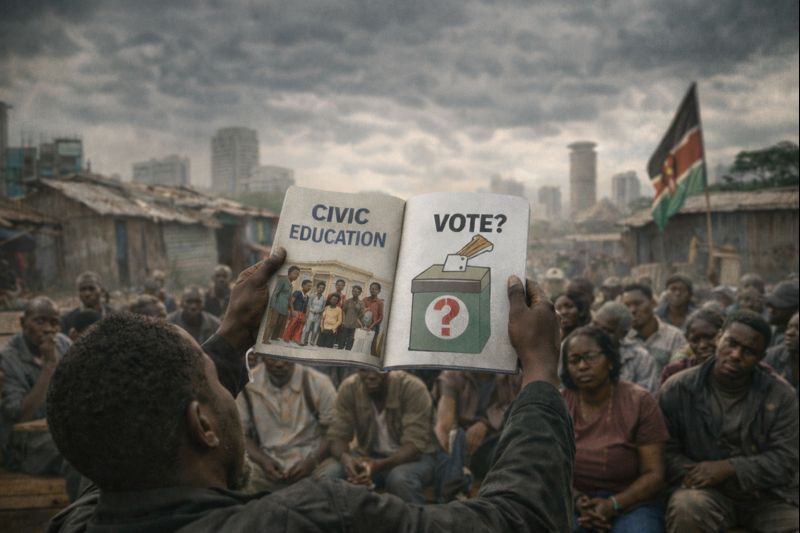
In democratic debates, voter turnout is often treated as the ultimate measure of success. High turnout is celebrated as proof of legitimacy, while low turnout is framed as democratic failure. Yet this focus on numbers hides a deeper truth: democracy is not sustained by turnout alone. In Kenya, the long-term health of democracy depends less on how many people vote and more on how well citizens understand governance. This is why civic education in Kenya matters more than voter turnout.
Voting is an event. Civic understanding is a process. Without sustained civic learning, high turnout can coexist with weak accountability, misinformation, and poor governance. Strengthening civic education in Kenya is therefore essential for meaningful democratic participation.
Understanding Civic Education in Kenya
At its core, civic education in Kenya refers to educating citizens about their rights, responsibilities, institutions, and democratic processes. It equips people to engage with governance beyond the ballot.
Effective civic education in Kenya enables citizens to interpret laws, evaluate leadership, and participate meaningfully in public life. Without this foundation, democracy becomes shallow and reactive.
Voter Turnout in Kenya and Its Limits
Voter turnout in Kenya is often used as a shorthand for democratic engagement. Elections with high turnout are praised, while declining participation raises alarm.
However, voter turnout in Kenya alone does not reveal whether voters understand policies, institutions, or consequences. High participation without understanding does not guarantee democratic quality.
Civic Awareness and Informed Citizenship
Civic awareness shapes how citizens interpret political events and decisions. Awareness determines whether people ask critical questions or accept narratives uncritically.
Low civic awareness weakens democracy even when turnout is high. Strengthening civic education in Kenya raises awareness and improves the quality of participation.
Citizenship Education and Democratic Responsibility
Citizenship education emphasizes the idea that democracy requires ongoing engagement, not just voting every few years. It fosters responsibility, tolerance, and respect for institutions.
Through citizenship education, civic education in Kenya helps citizens understand that democracy is sustained daily, not only on election day.
Political Literacy and Decision-Making
Political literacy allows citizens to evaluate leaders, policies, and institutions beyond slogans. Literate voters are less vulnerable to manipulation.
Low political literacy undermines democratic choice. Improving literacy strengthens civic education in Kenya and leads to more informed political decisions.
Democratic Participation Beyond Elections
Democratic participation includes public forums, policy consultations, civic advocacy, and accountability mechanisms. Voting is only one part of this ecosystem.
By deepening democratic participation, civic education in Kenya ensures citizens engage with governance throughout political cycles.
Informed Voters and Democratic Quality
Informed voters make choices based on understanding rather than emotion or identity. Information improves accountability and policy outcomes.
Without informed voters, high turnout can still produce weak governance. This reality highlights why civic education in Kenya is more impactful than turnout figures.
Democratic Culture and Long-Term Stability
A strong democratic culture values institutions, debate, and accountability. Culture is shaped over time through education and civic learning.
By nurturing democratic culture, civic education in Kenya builds resilience that turnout statistics alone cannot provide.
Public Participation and Civic Knowledge
Public participation is meaningful only when citizens understand processes and issues. Participation without knowledge often becomes symbolic.
Through civic education in Kenya, public participation becomes informed, constructive, and impactful rather than performative.
Accountability and Democracy
Accountability and democracy depend on citizens who understand oversight mechanisms and demand transparency. Accountability cannot function without knowledge.
Strengthening civic education in Kenya empowers citizens to use accountability tools effectively, regardless of voter turnout levels.
Citizen Responsibility and Democratic Health
Citizen responsibility involves staying informed, questioning authority, and engaging constructively. Voting alone does not fulfill this responsibility.
By emphasizing responsibility, civic education in Kenya strengthens democracy far beyond election participation.
Why Civic Education Matters More Than Voter Turnout
Many ask why civic education matters more than voter turnout. Turnout measures participation at a single moment, while education shapes engagement over time.
Understanding why civic education matters more than voter turnout reveals why democracies with informed citizens outperform those focused solely on numbers.
Civic Education Versus Voter Turnout
The debate over civic education versus voter turnout is not about choosing one over the other. Both matter, but they serve different purposes.
Turnout reflects presence; civic education in Kenya reflects understanding. Democracy needs both, but understanding sustains it.
Importance of Civic Education in Democracy
The importance of civic education in democracy lies in its ability to produce informed, engaged citizens who defend democratic norms.
Recognizing the importance of civic education in democracy explains why turnout spikes without education rarely translate into better governance.
Why Voter Turnout Alone Is Not Enough
Many democracies experience high turnout alongside poor governance. This reality answers why voter turnout alone is not enough.
Without civic education in Kenya, turnout becomes a ritual rather than a tool for accountability and reform.
How Civic Education Strengthens Democracy
How civic education strengthens democracy is through awareness, participation, and accountability. Education transforms voters into citizens.
By strengthening institutions and norms, civic education in Kenya ensures democracy survives beyond election cycles.
Constitution of Kenya 2010 and Civic Awareness
The Constitution of Kenya 2010 expanded rights and participation. However, rights are meaningful only when understood.
Through the Constitution of Kenya 2010, the need for civic education in Kenya became even more urgent.
IEBC and Voter Education Programs
The Independent Electoral and Boundaries Commission conducts voter education, mainly during elections.
While important, voter education programs alone cannot replace sustained civic education in Kenya throughout the political cycle.
Youth Civic Education and the Future
Youth civic education is critical because young people shape future democratic norms. Early engagement builds lifelong habits.
Investing in Youth civic education strengthens civic education in Kenya and secures democratic continuity.
Elections in Kenya and Democratic Depth
Elections in Kenya are competitive and highly visible. Yet elections alone do not guarantee democratic depth.
Democracy deepens when elections are complemented by strong civic education in Kenya.
The Risk of Turnout Obsession
An obsession with turnout can mask deeper problems: misinformation, apathy, and weak accountability.
Shifting focus to civic education in Kenya addresses these root causes rather than surface indicators.
Building Democracy Between Elections
Democracy lives between elections through oversight, participation, and civic dialogue.
By prioritizing civic education in Kenya, democracy becomes continuous rather than episodic.
What a Healthy Democracy Looks Like
A healthy democracy has informed citizens, trusted institutions, and active participation beyond voting.
This vision depends more on civic education in Kenya than on turnout percentages.
Conclusion
Civic education in Kenya matters more than voter turnout because democracy is sustained by understanding, not numbers alone. While turnout remains important, it is civic knowledge that transforms participation into accountability and governance into service. Informed citizens ask better questions, demand better leadership, and protect democratic institutions.
If Kenya’s democracy is to mature and endure, the focus must shift from how many people vote to how well citizens understand and engage with governance. Strengthening civic education in Kenya is therefore not a secondary reform, it is the foundation of democratic quality.
About The Author


